TO CONTINUE, CONFIRM THAT YOU ARE 18+ YEARS OLD
Disclaimer: please note that the offered products are legal in our country.
he Czech market for alternative cannabinoids and psychoactive compounds is facing another major change.
The Czech market for alternative cannabinoids and psychoactive compounds is facing another major change.
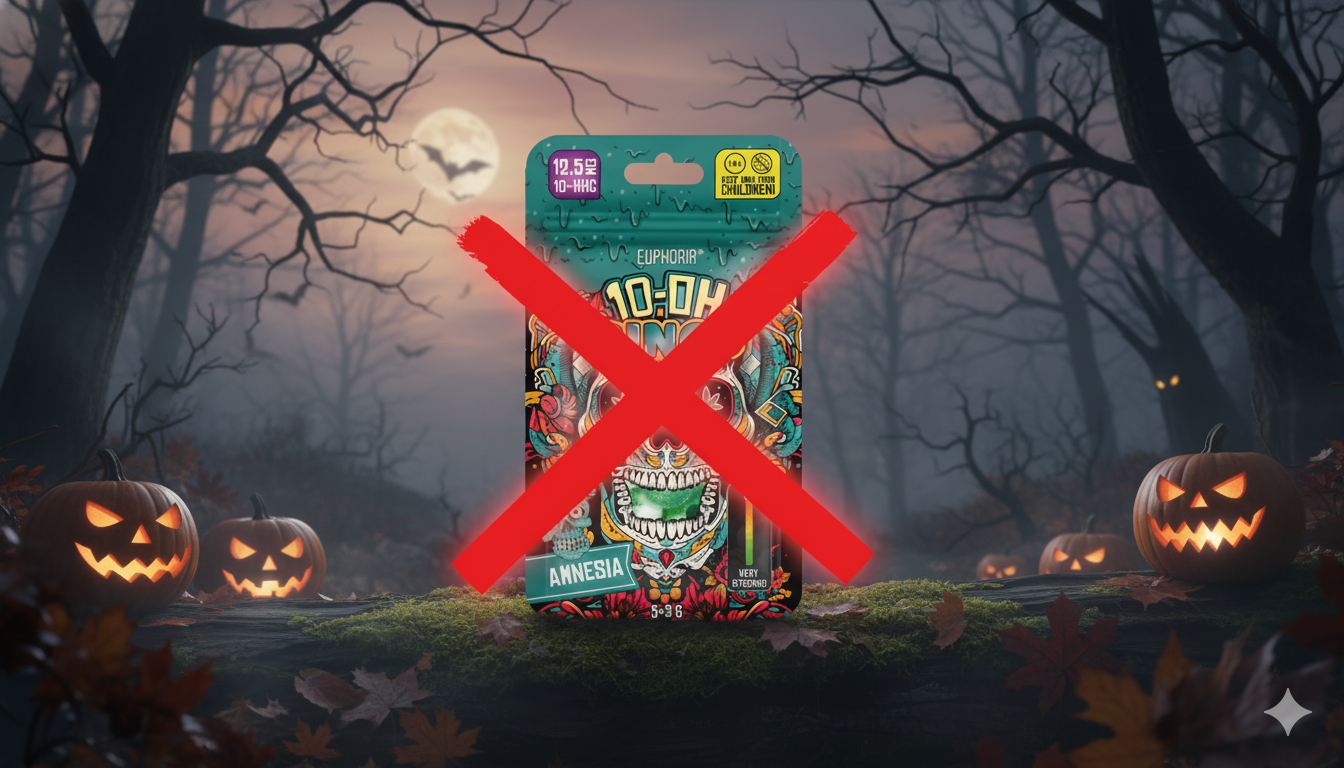
The Ministry of Health is preparing the third wave of substance bans, which is expected to take effect in November 2025. Among the newly banned substances are 10-OH-HHC and muscimol — two of the most talked-about compounds in recent months.
10-OH-HHC (hydroxy-hexahydrocannabinol) is a metabolite of HHC, a compound that naturally forms in the body after HHC consumption. Chemically, it’s a derivative of the cannabinoid HHC, known for its effects similar to THC — relaxation, mood elevation, and mild euphoria.
Over the past year, 10-OH-HHC has become popular as a replacement for HHC, which was banned in the Czech Republic during the first wave of restrictions. Producers promoted it as a legal alternative, since it wasn’t explicitly listed as a controlled substance.
The upcoming amendment, however, includes 10-OH-HHC among the newly banned compounds, effectively closing the loophole for most chemical substitutes that emerged after 2023.
Muscimol is a natural psychoactive compound found in the fly agaric mushroom (Amanita muscaria).
Unlike cannabinoids derived from hemp, muscimol comes from mushrooms that have been used for centuries in different cultures for their hallucinogenic effects.
Recently, muscimol appeared in products such as gummies, powders, and capsules, gaining attention as an alternative to banned cannabinoids.
However, the Czech Agriculture and Food Inspection Authority (CAFIA) has repeatedly warned about its health risks and banned several muscimol-based products.
The new regulation aims to classify muscimol as a controlled psychoactive substance, effectively ending its sale and distribution in the Czech Republic.
The new regulation is expected to take effect in early to mid-November 2025.
In addition to 10-OH-HHC and muscimol, the ban also includes 10-OH-THC, MDMB-PINACA, and ADB-BUTINACA — synthetic cannabinoids known for their stronger psychoactive effects.
The goal of this third wave of bans is to limit the spread of newly emerging psychoactive compounds, which often appear faster than the law can respond.
The Czech Republic continues to tighten its regulations on alternative cannabinoids.
After banning HHC, THCP, and similar compounds, the country is taking another step to restrict what’s legally available on the market.
The ban on 10-OH-HHC and muscimol is intended to improve safety and oversight in the psychoactive substances sector — but for producers and consumers alike, it marks another major shift.