
Prosím potvrďte že jste starší 18ti let
Upozorňujeme, že nabízené produkty jsou v naší zemi legální.
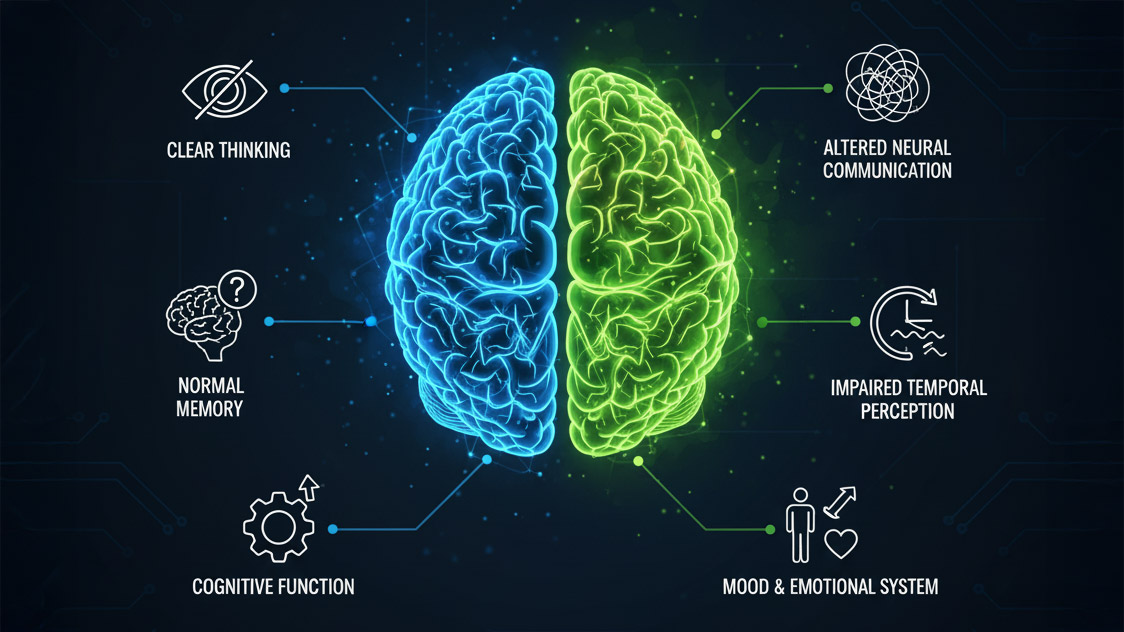
Cannabis affects the brain both immediately and in the long term – especially with frequent and heavy use or when use begins during adolescence...
THC binds to CB1 receptors in the brain and alters neuronal communication. Acutely, this leads to euphoria, changes in time perception and attention—and temporarily impairs learning and memory. Neuroimaging studies show altered brain activity during memory tasks.
cannabisevidence.org
Dopamine: Some PET studies suggest THC may increase dopamine release in the ventral striatum, which is related to motivation and reward. However, findings vary depending on study design.
PMC
Glutamate: Recent reviews suggest that acute cannabis use can increase glutamate levels in the basal ganglia and hippocampus—regions crucial for learning and movement.
PMC
Practical implications: Expect temporary impairments in learning/attention and possible effects on coordination with acute use—unsuitable for driving or tasks requiring peak cognition.
cannabisevidence.org
Working memory: The largest neuroimaging study to date (~1,000 young adults) found that heavy lifelong users (and recent users) showed lower brain activation during working memory tasks—even when not intoxicated.
PubMed
Brain structure: Reviews and meta-analyses report that long-term, especially heavy use is linked to reduced hippocampal volume. Lighter/recreational use often shows no differences. Authors note confounding factors (alcohol, tobacco, comorbidities), so causality is not always clear.
mentalhealth.bmj.com
SpringerLink
Reversibility: Some reviews indicate that cognitive impacts may improve after longer periods of abstinence, though the extent and speed of recovery vary between individuals.
PMC
The adolescent brain undergoes synaptic "reconstruction" and is more sensitive to psychoactive substances. Animal and human studies link early onset and frequent use with later changes in learning, memory, and dopamine signaling—potentially increasing vulnerability to mood disorders and psychosis. Current adolescent-focused reviews support this, though differences between studies exist.
Frontiers
ScienceDirect
THC is the main psychoactive component and more significantly alters functional connectivity and blood flow in the brain. In contrast, CBD may act as a balancing agent and reduce some THC effects. A 2025 animal neuroimaging study shows opposite connectivity changes after THC vs. CBD (note: preclinical data—caution needed in applying to humans).
PsyPost - Psychology News
Clinically: THC:CBD mixtures (e.g., 1:1) may reduce THC-induced anxiety or dysphoria in some individuals; however, individual responses vary. (Current evidence does not support a universal “ideal” ratio or dose.)
cannabisevidence.org
Different types of users: occasional vs. daily, starting at age 14 vs. 22, different cannabis strains and THC:CBD ratios
Methods: MRI vs. PET, cognitive testing batteries, definitions of “heavy” use
Confounding factors: alcohol, nicotine, sleep, mental health
Recent reviews caution against oversimplified conclusions like “cannabis shrinks the brain” or “cannabis has no impact”—context is crucial.
PubMed
Age: Avoid regular use during adolescence
Frontiers
Frequency and dose: Frequent and high doses = higher risk for memory and learning issues
PubMed
THC:CBD ratio: Choose products with lower THC and higher CBD, especially if prone to anxiety or psychosis
cannabisevidence.org
Form of use: Avoid smoking if you have cardiometabolic issues; consider vaporizing or oral forms with controlled doses (general recommendations across sources)
Abstinence and tolerance breaks: Breaks may improve cognitive function; sleep and daily routine hygiene increase the chance of performance recovery
PMC
Acute use: Worsened learning/attention, altered brain connectivity, impacts on dopamine/glutamate
cannabisevidence.org, PMC
Long-term and high doses: Persistent lower activation during working memory tasks; possible hippocampal volume reduction in heavy users (though causality is unclear)
PubMed, mentalhealth.bmj.com
Adolescents: Higher sensitivity—caution needed
Frontiers
CBD: May counteract some THC effects; the ratio matters
cannabisevidence.org